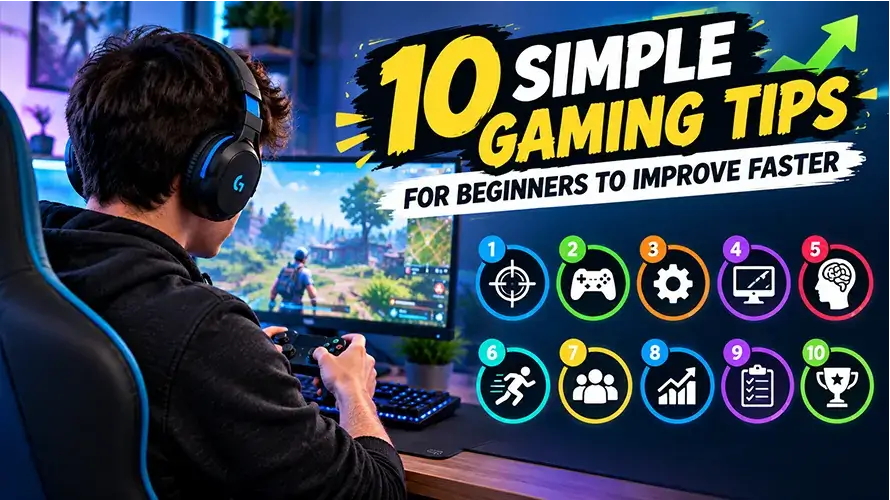
Starting a new game can be surprisingly confusing. You may understand the basic objective but still struggle with controls, lose repeatedly, miss important mechanics, or spend too much time trying to figure out what the game expects you to do.
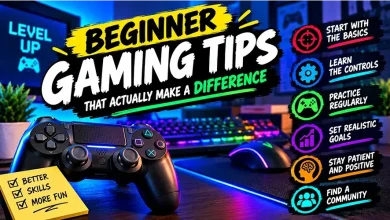
The good news is that beginners do not need complicated strategies to improve. A few practical habits can make almost any game easier to understand and more enjoyable. These gaming tips for beginners apply across browser games, puzzle games, arcade titles, action games, strategy games, and many other genres.
1. Learn the Controls Before Chasing Progress
One of the easiest mistakes is trying to win before learning how the game actually works. If you are still thinking about which key attacks, which button jumps, or how to open an inventory, your attention is divided between controlling the game and making decisions.
Spend a few minutes testing the basic controls. Move around, interact with objects, open menus, try your main action, and check how movement changes during different situations.
If the game allows controls to be customized, put frequently used actions somewhere comfortable. A small adjustment can make repeated actions easier to perform, particularly in games that require quick reactions.
2. Start With a Difficulty You Can Learn From
The hardest available difficulty is not automatically the best starting point. When you are unfamiliar with a game’s mechanics, excessive difficulty can make it difficult to understand why you are losing.
A moderate setting often gives beginners enough room to experiment. You can learn enemy patterns, resource management, movement, or puzzle logic without every mistake immediately ending the attempt.
Once the basic mechanics become familiar, increase the challenge if you want a more demanding experience.
3. Change Settings That Make the Game Harder to Read
Many players concentrate on gameplay but overlook settings that affect comfort and clarity. Depending on the game, options for sensitivity, audio, display, controls, subtitles, or visual effects can have a noticeable effect on how easily you understand what is happening.
For example, if important sounds are difficult to hear, adjusting the audio mix may help. If camera movement makes it harder to control your character, experimenting with sensitivity may be useful.
Do not assume the default configuration is perfect for everyone. Treat the settings as part of the learning process.
4. Focus on One Skill at a Time
Trying to improve everything simultaneously can make progress difficult to measure. Instead, identify the specific thing causing most of your problems.
If you regularly miss attacks, work on timing. If you lose because you run out of resources, pay attention to resource management. If you keep getting lost, learn the game’s map and navigation system.
This approach turns a vague goal such as “get better” into something you can actually practice.
5. Expect to Make Mistakes
Failure is useful when you can identify what caused it. Losing a round or failing a level does not necessarily mean you are bad at the game. It gives you information about what needs to change.
After an unsuccessful attempt, ask yourself three simple questions:
- What happened immediately before I failed?
- Was the problem caused by timing, positioning, decision-making, or lack of knowledge?
- What can I change during the next attempt?
Even a few seconds of reflection can turn repeated failure into deliberate practice.
6. Watch for Patterns Instead of Reacting to Everything
Many games become easier once you recognize repeated patterns. An opponent may attack after a particular movement. A puzzle may use the same type of logic repeatedly. An arcade challenge may place obstacles in predictable sequences.
Instead of reacting to every event as if it were completely new, look for repetition. Recognizing a pattern allows you to prepare before something happens rather than simply responding afterward.
This is particularly useful in action, puzzle, rhythm, arcade, and strategy games.
7. Do Not Rush Through the Tutorial
Tutorials are sometimes tempting to skip, especially when you want to start playing immediately. However, a short tutorial may explain mechanics that the game assumes you already understand later.
Pay particular attention when a tutorial introduces something unusual, such as a special movement system, crafting mechanic, resource type, scoring rule, or interaction method.
If you skip something accidentally, check the game’s help or controls menu before searching elsewhere. The information you need may already be available inside the game.
8. Take Short Breaks When Frustration Takes Over
Practice becomes less useful when frustration starts affecting your decisions. After several unsuccessful attempts, you may begin rushing, taking unnecessary risks, or repeating the same mistake without thinking about the cause.
A short break can help reset your attention. When you return, approach the same challenge with a specific objective rather than simply trying to win again.
For example, instead of saying “I need to beat this level,” try “I want to reach the difficult section without losing health.” Smaller objectives make improvement easier to observe.
9. Use Guides When You Are Stuck, Not for Every Decision
Guides, walkthroughs, and tutorials can save time when you genuinely cannot understand a mechanic or solve a problem. However, checking a solution for every small challenge can remove the opportunity to develop your own understanding.
Try the challenge yourself first. If you remain stuck after several reasonable attempts, look for information about the specific problem rather than immediately searching for a complete walkthrough.
This gives you help without turning the entire game into a sequence of instructions to follow.
10. Choose Games That Match Your Current Interests
Improving at games is easier when you actually enjoy the type of challenge involved. Someone who likes solving problems may naturally spend more time with puzzle or strategy games, while another player may prefer quick arcade rounds or action-focused gameplay.
You also do not need to force yourself to finish a game that does not suit you. Trying different genres can help you discover the mechanics and play styles you enjoy most.
When choosing your next game, consider whether you want short sessions, gradual progression, competitive challenges, creative freedom, or relaxed problem-solving. The right fit can matter more than choosing the most difficult game available.
A Simple Beginner Practice Routine
If you want a practical way to apply these tips, use a short routine whenever you start an unfamiliar game.
- Spend the first few minutes learning the controls. Test movement, interaction, attacks, menus, and other basic actions.
- Identify the main objective. Understand what the game actually asks you to accomplish.
- Learn one important mechanic. Focus on the feature that has the greatest effect on your progress.
- Play a few attempts without worrying about perfection. Use mistakes to discover how the game behaves.
- Choose one weakness to improve. Practice that specific skill instead of trying to fix everything at once.
- Adjust the difficulty or settings when necessary. Make the experience challenging without making it unnecessarily confusing.
This routine works because it separates learning from winning. You can make progress even during an attempt that does not end in success.
Quick Reference: What to Do When You Struggle
| Problem | What to Try |
|---|---|
| You keep losing immediately | Lower the difficulty and spend time learning enemy or level patterns. |
| The controls feel uncomfortable | Review the control settings and customize frequently used actions if possible. |
| You do not understand the objective | Revisit the tutorial, objective screen, or in-game help menu. |
| You make the same mistake repeatedly | Identify exactly when the mistake occurs and practice that situation separately. |
| You become frustrated | Take a short break and return with one specific improvement goal. |
| You are completely stuck | Search for a targeted guide covering the exact mechanic or challenge. |
Common Beginner Habits That Slow Progress
Some habits make learning unnecessarily difficult. Recognizing them early can save a lot of time.
- Rushing through instructions: Important mechanics are often introduced before they become necessary.
- Changing strategies constantly: Switching approaches after every mistake makes it difficult to discover what actually works.
- Ignoring the game’s feedback: Sounds, visual indicators, animations, and messages often explain what caused an event.
- Trying to memorize everything: Learn the most important mechanics first and let less important details become familiar through play.
- Comparing yourself with experienced players: Someone with hundreds of hours of practice has had far more opportunities to learn the game’s systems.
The goal during your first sessions should be understanding, not perfect performance.
Frequently Asked Questions
What are the best gaming tips for beginners?
Start by learning the controls, understanding the main objective, practicing one skill at a time, studying your mistakes, and adjusting the difficulty when necessary. These habits work across many different genres.
Should beginners always play on easy difficulty?
No. The best difficulty is one that allows you to understand the game’s mechanics while still providing an appropriate challenge. A moderate setting can be a useful starting point, but preferences vary.
How can I improve at games faster?
Focus on specific weaknesses instead of simply playing more. Identify the reason behind a mistake, practice that particular skill, and then test whether your new approach works.
Is it bad to use gaming guides?
No. Guides are useful when you are genuinely stuck or need clarification. If you want to develop your own problem-solving skills, try the challenge yourself before looking for a complete solution.
How long should a beginner practice?
There is no universal amount of time. Short, focused sessions can be more productive than long sessions where concentration and patience have already declined.
Final Thoughts
Getting better at games does not require mastering every mechanic immediately. Learn the controls, pay attention to patterns, treat mistakes as information, and give yourself enough time to understand how a game expects you to play.
The most useful habit is simple: when something goes wrong, pause long enough to identify why. That small change turns random repetition into purposeful practice and gives you a clearer path toward improving your skills.