If you have ever opened a game for a few minutes while waiting for something, you have probably played a casual game without thinking much about the label. Casual games are designed around accessibility, straightforward rules, and sessions that can often fit into a short break, although some can become surprisingly deep and engaging over time.
So, what is a casual game? The simplest definition is a game that is generally easy to understand and approachable for a broad audience, without requiring extensive gaming experience before you can start enjoying it. Casual does not necessarily mean simplistic or uninteresting. A well-designed casual game can offer meaningful progression, challenging decisions, competitive play, or considerable long-term depth.
This guide explains what makes a game casual, how the category differs from other types of games, which mechanics are commonly associated with it, and how to decide whether a casual game is a good fit for the way you like to play.
What Defines a Casual Game?
There is no single rule that determines whether a game officially belongs to the casual category. Instead, the term usually describes a combination of design choices and the intended player experience.
Casual games commonly reduce the amount of preparation needed to start playing. The basic objective may be explained within moments, controls tend to be approachable, and the player can often make progress without learning a complicated system first.
Another important characteristic is flexibility. Many casual games work well when played for a few minutes, but the best examples do not necessarily force every session to be short. A puzzle game, for example, might offer quick rounds while also giving players increasingly difficult challenges to master.
- Simple entry point: New players can usually understand the basic objective quickly.
- Accessible controls: The game does not normally require a large number of complex inputs.
- Flexible sessions: Many casual games can be enjoyed in short periods.
- Gradual learning: Difficulty and mechanics can become more advanced as the player progresses.
- Broad appeal: The design is often intended to be understandable without specialist gaming knowledge.
These characteristics are tendencies rather than strict requirements. A casual game can still contain sophisticated strategy, competitive systems, or difficult late-game challenges.
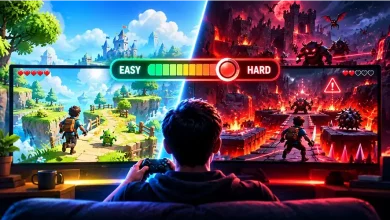
Casual Does Not Mean “Easy”
One of the most common misunderstandings is that casual games are automatically easy. In reality, accessibility and difficulty are different concepts.
A game can be easy to start but difficult to master. A simple puzzle might require only a few seconds to learn but eventually demand careful planning. Likewise, an arcade game may have extremely basic controls while requiring precise timing to achieve a high score.
This distinction is useful when choosing games. If you want something that is easy to understand but still gives you room to improve, look for casual games with increasing difficulty, score-based challenges, unlockable content, or competitive leaderboards.
Common Types of Casual Games
Casual gaming is better understood as a broad design category than as one specific genre. Different genres can contain casual games because the word describes accessibility and presentation rather than a particular gameplay formula.
Casual Puzzle Games
Puzzle games are a natural match for casual audiences. Their objectives can often be explained quickly, while the actual challenge comes from recognizing patterns, solving problems, managing limited moves, or finding efficient solutions.
Some puzzle games are ideal for a short session, while others provide hundreds of increasingly demanding challenges. This makes the format suitable for both occasional players and people who enjoy gradually improving their performance.
Casual Arcade Games
Arcade-style games often focus on immediate action. The player may need to avoid obstacles, collect objects, survive for as long as possible, or achieve a higher score.
The appeal comes from the short feedback loop: you play, make a mistake or reach a goal, and can quickly try again. This structure makes arcade games particularly suitable for browser gaming and short breaks.
Casual Action Games
Casual action games simplify the controls or systems found in more demanding action titles. Instead of requiring extensive knowledge of complicated mechanics, they may focus on movement, timing, aiming, dodging, or simple combat decisions.
Casual Strategy Games
Strategy is not limited to complex games that require long sessions. Casual strategy titles can introduce resource management, tactical choices, territory control, or planning through simplified systems.
The player may have fewer variables to manage, allowing them to concentrate on the central decision-making mechanic rather than learning a large collection of rules.
Casual Simulation Games
Simulation games can also appeal to casual players when their systems are easy to understand. Managing a small shop, organizing a virtual space, building a simple environment, or completing everyday tasks can provide progression without requiring an extensive tutorial.
How Casual Games Compare With Other Gaming Experiences
The difference between casual and other games is usually a matter of degree rather than a strict division. A game can borrow mechanics from several categories and still be accessible to casual players.
| Type of Experience | Typical Entry Barrier | Common Session Style | What Players May Focus On |
|---|---|---|---|
| Casual | Low to moderate | Often flexible | Quick enjoyment, progression, puzzles, scores, or simple challenges |
| Hardcore-focused | Moderate to high | Often longer or more demanding | Mastery, complex mechanics, precision, competition, or deep systems |
| Arcade | Usually low | Often short and repeatable | Scores, reflexes, timing, and immediate action |
| Strategy | Varies | Short or extended | Planning, resource management, tactics, and decision-making |
| Role-playing | Varies | Often extended | Progression, characters, exploration, equipment, and story |
The categories can overlap. A game can be both casual and strategic, or casual and arcade-focused. What matters is how its mechanics are presented and how much knowledge or commitment is required from the player.
Why Do Casual Games Work So Well for Short Sessions?
Casual games often make it possible to reach a satisfying gameplay moment without investing a large amount of time. A player might complete one puzzle, survive another round, beat a previous score, or unlock a small reward before leaving the game.
This structure removes some of the pressure associated with games that expect players to remember a complex story, manage several systems, or complete lengthy missions in one sitting.
Good casual design also creates a clear connection between action and feedback. The player makes a move, sees the result, understands whether it helped, and immediately knows what to try next.
That does not mean every casual game is designed exclusively for short sessions. Some players may return to the same title for much longer periods because the underlying mechanics provide enough variety and progression to remain interesting.
What Makes a Casual Game Fun?
Accessibility may explain how people start a casual game, but it does not explain why they keep playing. Retention comes from the quality of the underlying experience.
A Clear Goal
Players should understand what they are trying to accomplish. The objective might be reaching a target score, solving a puzzle, completing a level, surviving an obstacle course, or building something successfully.
Immediate Feedback
Good feedback tells players whether their actions are working. Visual changes, sound effects, score updates, animations, or progress indicators can make even a simple action feel meaningful.
Gradual Challenge
A game that never becomes more demanding can lose its appeal. Casual games often work better when new obstacles, rules, puzzles, or strategic choices are introduced gradually.
Meaningful Progress
Progression gives players a reason to return. Depending on the game, this might involve new levels, improved scores, cosmetic changes, new mechanics, achievements, or increasingly difficult challenges.
How to Choose a Casual Game That Fits You
Not every casual game will suit every player. The category includes puzzle games, action games, simulations, arcade challenges, word games, strategy titles, and many other formats.
Instead of choosing based only on the word “casual,” think about what you want from the session.
- You want a relaxing experience: Look for simple puzzles, simulations, or games with slower pacing.
- You want quick excitement: Arcade and fast-action games may provide more immediate feedback.
- You enjoy solving problems: Try puzzle or light strategy games.
- You like improving scores: Choose games built around repeat attempts and personal records.
- You want progression: Look for games with levels, unlocks, achievements, or increasingly complex mechanics.
- You have very little time: Prioritize games with short, clearly separated rounds or levels.
This approach is more useful than assuming every casual game provides the same experience. The label tells you something about accessibility, but the actual gameplay determines whether you will enjoy it.
Casual Games in the Browser
Browser games have a natural connection with casual gaming because they can often be accessed directly from a compatible web browser without requiring the same setup associated with larger games.
This makes browser-based casual games convenient for players who want to try a puzzle, arcade challenge, strategy experience, or other lightweight game without committing to a lengthy gaming session.
For browser players, it is still worth considering practical factors such as device compatibility, control quality, loading performance, readability, and whether the game’s design works well on a mouse and keyboard or touch screen.
Casual Games vs. Hyper-Casual Games
The terms casual and hyper-casual are sometimes used interchangeably, but they can describe different design approaches.
Hyper-casual games generally push simplicity further. Their core mechanic may be understood almost immediately, with minimal instructions and very short gameplay loops. Casual games have a much broader range and can contain more progression, variety, customization, or strategic depth.
In other words, hyper-casual can be viewed as a particularly streamlined approach within the wider landscape of accessible games, while casual gaming itself covers a much larger range of experiences.
Common Mistakes When Choosing a Casual Game
Judging a Game Only by Its Graphics
Attractive visuals can make a game interesting at first glance, but they do not tell you whether the gameplay matches your preferences. Look at the core mechanic and the type of challenge before deciding.
Assuming Simple Controls Mean Simple Gameplay
A game can use only a few buttons while still demanding careful timing, planning, or pattern recognition. Consider what the player actually has to accomplish rather than counting the number of controls.
Ignoring Session Length
If you only have a few minutes, a game designed around long uninterrupted sessions may not be a good match even if its mechanics are accessible. Check how the game structures levels, rounds, or progress.
Confusing Familiarity With Quality
A familiar genre can make a game easy to understand, but familiarity alone does not guarantee an enjoyable experience. Look for responsive controls, understandable goals, sensible progression, and challenges that remain interesting.
Can Casual Games Still Be Challenging?
Absolutely. A game can be casual in presentation while offering a high skill ceiling.
For example, a simple arcade game might be effortless to understand but increasingly difficult to play well. A puzzle game may use only a few rules yet create complex situations when those rules interact. A casual strategy game can similarly introduce meaningful decisions without overwhelming the player with dozens of systems.
This is one reason the casual category is so broad. Accessibility describes the entry point, not necessarily the maximum level of mastery available.
Frequently Asked Questions
What is a casual game?
A casual game is generally designed to be easy to understand and accessible to a broad audience. It often features approachable controls, clear objectives, flexible sessions, and gradual progression, although individual games can vary considerably in complexity and difficulty.
Are casual games only for beginners?
No. Experienced players can enjoy casual games when they want a quick puzzle, relaxing activity, score challenge, or different style of gameplay. Casual refers primarily to accessibility and design rather than the experience level of the player.
Are casual games always easy?
No. A casual game can be easy to learn but difficult to master. Arcade challenges, puzzles, and competitive score-based games can become demanding even when their basic mechanics are simple.
What genres can be casual games?
Almost any genre can contain casual games. Puzzle, arcade, action, strategy, simulation, word, sports, and adventure games can all use casual design principles.
What is the difference between casual and hyper-casual games?
Hyper-casual games generally emphasize an extremely simple core mechanic and very short gameplay loops. Casual games cover a wider range and can include substantially more progression, variety, and strategic depth.
Final Thoughts
Understanding what is a casual game becomes easier when you stop treating “casual” as a synonym for “easy.” The category is mainly about accessibility, flexible engagement, and a low barrier to getting started, while the actual challenge can range from completely relaxed to surprisingly demanding.
Whether you prefer quick browser puzzles, arcade score runs, light strategy, or simple action, the best choice depends on the kind of experience you want from your next gaming session. Start with the gameplay loop, difficulty curve, and expected session length rather than relying on the genre label alone.