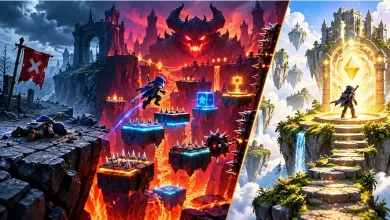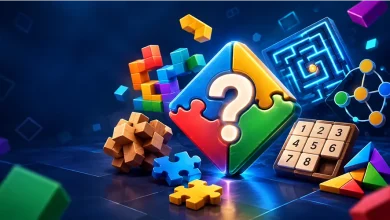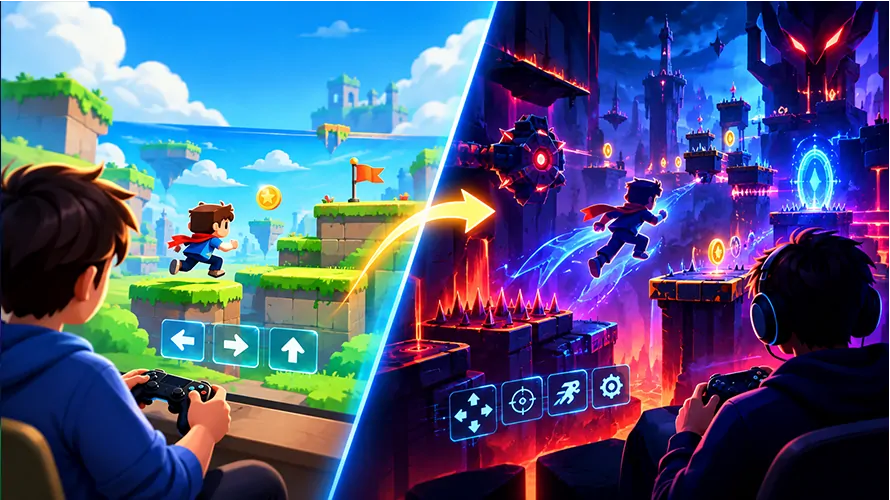
The best games do not always begin with a long tutorial, complicated controls, or pages of instructions. Some can be understood within a few minutes, yet still give players something new to improve long after the basics become familiar. This balance is what makes easy to learn hard to master games so appealing across browser, arcade, puzzle, action, strategy, and casual gaming.
The idea sounds simple: a new player should understand what to do quickly, while experienced players should have enough depth to keep improving. Achieving that balance, however, requires careful game design. A strong game can make its basic rules obvious while leaving advanced possibilities for players to discover through practice.
The Difference Between Learning a Game and Mastering It
Learning usually means understanding the game’s basic rules, controls, objectives, and immediate feedback. A player might know how to move, attack, solve a puzzle, score points, or complete a level without needing much previous experience.
Mastery is different. It involves consistently making better decisions, recognizing patterns, managing timing, understanding risk, and adapting to situations that are more difficult than the introductory challenges.
A useful way to think about the difference is this: learning tells you what actions are possible, while mastery teaches you when, why, and how to use them effectively.
| Early Learning | Long-Term Mastery |
|---|---|
| Understand the controls | Use controls with precision |
| Recognize the main objective | Develop better strategies for achieving it |
| Complete basic challenges | Handle increasingly demanding situations |
| React to obvious situations | Predict what may happen next |
| Learn individual mechanics | Combine mechanics efficiently |
Simple Rules Create a Fast Starting Point
A game becomes easier to learn when players can quickly understand its central idea. The objective does not have to be simplistic, but it should be clear enough that a newcomer can begin experimenting without constantly checking instructions.
For example, a puzzle game might present a grid and allow the player to move or combine objects. An arcade game might reduce the basic interaction to movement and one primary action. A strategy game can also have substantial depth while introducing only a few decisions at the beginning.
The important distinction is between simple entry and simple gameplay. A game can have a small number of initial rules while eventually creating thousands of meaningful combinations from those rules.
Controls Should Become Invisible With Practice
Good controls rarely require the player to think about every individual input. After enough practice, movement, aiming, jumping, matching, attacking, or selecting an option becomes increasingly automatic.
This matters because mastery becomes difficult when the interface itself constantly gets in the way. When controls are predictable, experienced players can concentrate on timing and decision-making instead of remembering which button performs a basic action.
For browser games in particular, this can be important. A player may encounter a game for the first time and expect to understand its basic interaction almost immediately. Clear input behavior gives the player a chance to discover the game’s deeper challenge instead of abandoning it during the learning stage.
Depth Comes From Decisions, Not Just More Rules
Adding more mechanics does not automatically make a game deeper. If every new feature simply adds another rule to memorize, the result can feel complicated rather than rewarding.
Depth often comes from giving players multiple meaningful choices. A player might have to decide whether to act immediately or wait, take a safe option or accept greater risk, spend a resource now or save it for later, or pursue a short-term advantage that creates a future disadvantage.
This is one reason a small collection of mechanics can support surprisingly deep gameplay. When the same basic actions interact in different circumstances, players can continue discovering better ways to use them.
Why Timing Can Turn a Simple Mechanic Into a Difficult Challenge
Timing is one of the easiest ways to create a gap between basic competence and mastery. Pressing a button at the correct moment may be easy to understand, but consistently finding the ideal moment can require substantial practice.
Consider a game where an obstacle can be avoided with a single jump. The rule is straightforward. A beginner may simply learn to jump when an obstacle approaches, while an experienced player may learn exactly when to jump, how to maintain momentum, and how to prepare for the next obstacle at the same time.
The mechanic has not necessarily become more complicated. The player’s understanding and execution have become more precise.
Patterns Give Skilled Players Something to Discover
Many games reward players who learn to recognize patterns. These patterns can involve enemy behavior, level layouts, puzzle structures, resource cycles, attack sequences, or scoring opportunities.
A beginner may respond to each situation as it appears. A more experienced player starts recognizing what is likely to happen before it happens. That shift from reaction to prediction creates a natural path toward mastery.
Good pattern-based design also avoids making the solution completely obvious. Players should have enough information to improve through observation, but enough uncertainty to make successful prediction feel earned.
Failure Should Teach the Player Something
Difficulty becomes much more satisfying when failure provides useful information. If a player loses and understands exactly what went wrong, the next attempt has a clear purpose.
Perhaps the player reacted too late, spent a resource unnecessarily, chose an inefficient route, misunderstood an opponent’s behavior, or attempted a strategy that works only in certain circumstances. Each failure can become part of the learning process.
This is particularly effective in short-session games. When restarting is quick, players can immediately test a new idea instead of spending several minutes repeating a lengthy introduction.
A good challenge does not merely stop the player. It gives the player a reason to try a different approach.
Progression Should Reveal Skill Rather Than Hide It
Progression systems can help players understand their improvement, but the most satisfying progression often comes from the player becoming better rather than simply becoming more powerful.
Unlocking a stronger character or better equipment can certainly change difficulty, but skill-based progression creates a different feeling. The same challenge that once seemed difficult may become manageable because the player now understands its timing, patterns, positioning, or strategic possibilities.
This creates a particularly strong form of replay value. Players return not because the game has changed dramatically, but because they believe they can perform better than they did before.
Examples Across Different Game Genres
The easy-to-learn, hard-to-master principle can appear in very different types of games. The specific source of difficulty changes by genre, but the underlying design idea remains similar.
Arcade Games
Arcade games often rely on straightforward controls and increasingly demanding timing. The first few moments can be immediately understandable, while higher scores require accuracy, rhythm, anticipation, and consistency.
Puzzle Games
A puzzle may begin with a simple interaction such as matching, moving, rotating, or arranging objects. Mastery emerges when players recognize patterns faster, plan several moves ahead, or solve situations with fewer mistakes.
Action Games
Basic movement and attacks may be easy to learn, but advanced play can depend on positioning, timing, combinations, enemy behavior, and efficient use of limited abilities.
Strategy Games
A strategy game can teach a small number of basic actions while creating complexity through their interactions. Experienced players often improve by understanding trade-offs, planning ahead, and adapting when an initial plan stops working.
Casual and Browser Games
Short-session games often benefit from immediate accessibility. A player can understand the basic objective quickly, while optional challenges, higher scores, faster completion times, or increasingly difficult stages provide reasons to continue practicing.
Five Signs That a Game Has Real Depth
- The basics are understandable quickly. A newcomer can begin playing without needing to memorize a large rulebook.
- Practice produces noticeable improvement. Players can identify mistakes and see themselves becoming more consistent.
- The same mechanics remain useful at higher difficulty. Advanced play builds on the foundation instead of replacing it completely.
- There are meaningful choices. Players have opportunities to make decisions rather than simply follow a fixed sequence.
- Experienced players can still discover better approaches. The game leaves room for experimentation, optimization, and personal play styles.
When Simple Gameplay Becomes Too Simple
Accessibility alone does not guarantee lasting appeal. If a game gives players very little to discover after they understand the basic mechanic, the experience may become repetitive quickly.
The challenge is finding enough depth without making the opening unnecessarily complicated. A useful design approach is to introduce complexity gradually. Players first learn the core interaction, then encounter situations that encourage them to use that interaction in more sophisticated ways.
This allows the game to remain approachable without removing the possibility of long-term improvement.
When Difficulty Stops Feeling Fair
A game can also fail at the other end of the spectrum. If success depends on information the player could not reasonably know, inconsistent controls, or unpredictable events with no meaningful response, difficulty may feel arbitrary rather than skill-based.
Fair difficulty generally gives players enough information to understand what happened. Even when a challenge is demanding, the player should be able to think, “I know what I need to improve,” rather than simply wondering why the game prevented progress.
This distinction is important for both beginners and experienced players. A difficult game can be welcoming when its rules are consistent and its feedback is clear.
How to Choose an Easy-to-Learn Game With Long-Term Depth
If you are looking for a game that is approachable but still capable of holding your attention, consider how it handles the first few minutes and the later stages separately.
- Look for controls that can be understood without extensive instruction.
- Check whether the main objective is immediately clear.
- Look for challenges that increase through better decision-making rather than arbitrary difficulty.
- Consider whether mistakes provide useful feedback.
- Look for multiple strategies or approaches when the genre supports them.
- Pay attention to whether improvement depends on player skill as well as progression systems.
- Consider whether you enjoy the game’s core mechanic enough to repeat it while improving.
The last point is especially important. A game does not need dozens of mechanics to provide depth. If its central action remains satisfying after repeated attempts, even a compact browser or arcade game can offer substantial replay value.
A Useful Way to Think About Mastery
Mastery is rarely one giant leap from beginner to expert. It usually develops through several smaller stages.
- Recognition: You understand what the game is asking you to do.
- Execution: You can perform the basic actions reliably.
- Consistency: You can repeat successful actions without depending on luck.
- Prediction: You begin anticipating situations instead of reacting to them.
- Optimization: You search for faster, safer, or more efficient solutions.
- Adaptation: You can change your approach when the usual strategy is no longer effective.
This progression explains why a game can remain interesting even after its controls are completely familiar. The player’s understanding continues to develop even though the basic rules remain stable.
Frequently Asked Questions
What does easy to learn but hard to master mean in gaming?
It describes games where the basic controls and objectives are easy for newcomers to understand, while achieving consistently strong results requires practice, timing, strategy, pattern recognition, or precise execution.
Are simple games always easy to master?
No. Simple rules can support considerable depth. A game may have only a few actions while creating difficult decisions through timing, positioning, combinations, or increasingly demanding situations.
What makes a game difficult without making it confusing?
Clear rules, predictable controls, useful feedback, and gradually increasing challenges allow a game to become difficult while remaining understandable. Players should know what they are trying to accomplish and have enough information to improve.
Why do players enjoy mastering a simple mechanic?
Repeated practice can create a strong sense of improvement. When players notice that better timing, planning, or decision-making produces better results, the challenge becomes a test of their own skill rather than simply a sequence of obstacles.
Can browser games be hard to master?
Yes. Browser games can use the same principles as larger games: simple controls can be combined with demanding timing, strategic decisions, pattern recognition, resource management, or increasingly challenging levels.
Final Thoughts
The strongest easy-to-learn, hard-to-master games separate accessibility from depth. A newcomer can understand the basic interaction quickly, but continued play reveals better timing, smarter decisions, deeper patterns, and more efficient ways to use familiar mechanics.
That balance is valuable because it respects the player’s time without limiting the player’s potential. Whether the game is a quick browser puzzle, an arcade challenge, an action game, or a strategy experience, lasting depth often comes from giving simple rules enough meaningful interactions to reward curiosity and practice.