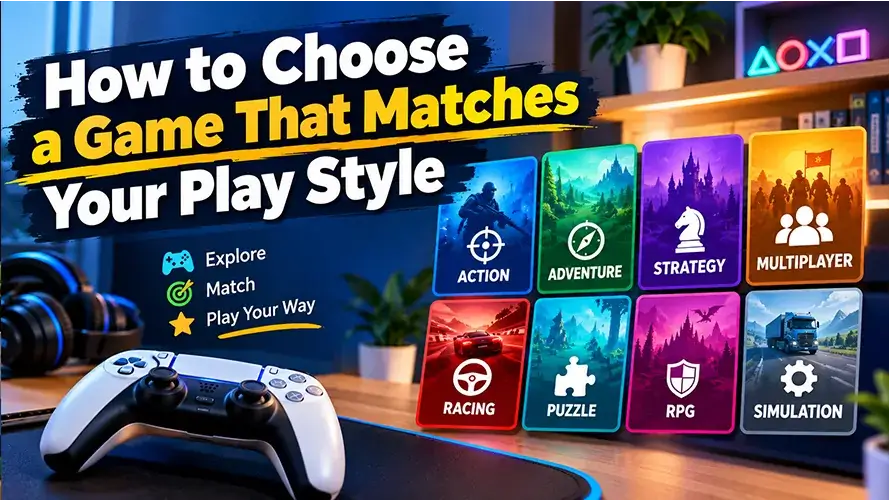
The best game for you is not necessarily the game with the biggest audience, the most features, or the highest difficulty. A game can be excellent and still feel wrong if its pace, controls, objectives, or level of competition do not match the way you like to play.
Learning how to choose a game starts with identifying what you actually enjoy during a gaming session. Do you want quick rounds, relaxed puzzles, strategic decisions, constant action, exploration, competition, or something you can play for five minutes at a time? Once you understand those preferences, choosing between different genres becomes much easier.
Start With the Way You Like to Play
Instead of choosing a game by genre alone, think about what you want to experience while playing. Two games from the same category can require completely different approaches. An arcade game may reward quick reactions, while another may depend more on planning and patience.
Consider these five basic preferences before selecting your next game:
- Pace: Do you prefer fast action or a slower, more thoughtful experience?
- Challenge: Do you enjoy difficult tasks, or would you rather play with minimal pressure?
- Competition: Do you want to compete against other players, or play entirely on your own?
- Session length: Do you usually have a few minutes or enough time for longer sessions?
- Purpose: Are you trying to relax, improve your skills, solve problems, explore, or simply pass the time?
These questions are often more useful than simply asking yourself which genre you like. Your answers create a practical picture of your personal play style.
Match the Game to Your Preferred Pace
Pace has a major effect on whether a game feels comfortable or frustrating. Some players want something that starts immediately and keeps them moving. Others enjoy having time to consider each decision.
| Preferred pace | Games that may suit it | What to look for |
|---|---|---|
| Very fast | Arcade and action games | Short rounds, quick reactions, immediate objectives |
| Moderate | Casual and adventure games | Steady progression and a mixture of action and downtime |
| Slow and thoughtful | Puzzle and strategy games | Planning time, deliberate decisions, and problem solving |
| Flexible | Many browser and casual games | Short sessions and adjustable difficulty or progression |
If you regularly stop playing because a game feels too slow, a faster style may suit you better. If constant action makes you tired, look for games that allow you to pause, plan, or progress at your own pace.
Think About What Makes a Game Satisfying
People can enjoy completely different aspects of gaming. One player may feel satisfied after beating a difficult level, while another may prefer discovering a new area or solving a complicated puzzle.
Identify the moment that makes you want to play another round. If you enjoy seeing your score improve, games with short repeatable challenges may be a good match. If you like solving problems, look for games built around puzzles, logic, resource management, or tactical decisions.
Players who enjoy constant progression may prefer games where completing objectives gradually unlocks new challenges. Someone who dislikes long-term progression may instead prefer self-contained browser games where each session provides a complete experience.
If You Enjoy Improving Your Skills
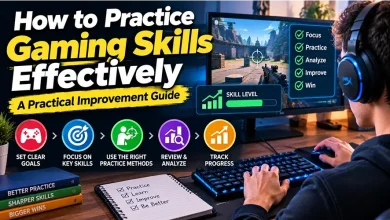
Look for games where practice produces noticeable improvement. Arcade challenges, reaction-based games, precision games, and certain strategy games can work well because your decisions and timing directly affect the outcome.
If You Prefer Relaxation
Choose games that do not constantly punish mistakes or demand rapid decisions. Casual puzzles, simple simulation experiences, and slower-paced browser games can provide a more comfortable session.
If You Enjoy Solving Problems
Puzzle and strategy games are natural options, but you do not have to limit yourself to those genres. Some action and adventure games also use navigation, resource management, environmental puzzles, or tactical choices to create a problem-solving experience.
Choose the Right Level of Difficulty
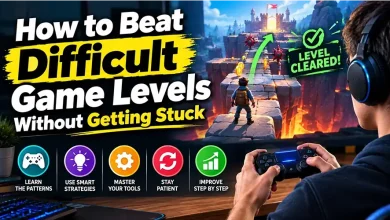
Difficulty should be treated as a personal preference rather than a measure of how good a player is. A game that is enjoyable for one person can become exhausting for another if the challenge is poorly matched to their expectations.
If you want a relaxed experience, check whether a game offers simple controls, forgiving mistakes, or adjustable difficulty. If you actively seek a challenge, look for games that require timing, planning, pattern recognition, or repeated practice.
There is also an important difference between challenging and confusing. A good challenge gives you enough information to understand what you need to improve. If failure feels random or the objective is unclear, the problem may not be the difficulty itself.
Consider How Much Time You Actually Have
A game should fit your available time instead of forcing you to reorganize your schedule around it. This is especially important for people who mainly play browser games or use gaming as a short break.
If you typically have five to fifteen minutes, prioritize games with quick starts, short rounds, and clear stopping points. Arcade, puzzle, and many casual games can work well in this situation.
If you regularly have longer uninterrupted sessions, you can consider games with deeper progression, more complex systems, or objectives that take longer to complete.
There is no advantage in choosing a game designed for long sessions when you only have a few minutes. You are more likely to enjoy a game that fits naturally into the time you have available.
Use Controls as a Selection Filter
Controls are often overlooked when people decide what to play. A game can have an appealing concept but still feel uncomfortable if its control scheme does not suit you.
Before committing to a game, consider whether you prefer keyboard controls, mouse interaction, touch controls, or a combination. Browser games can be particularly convenient when their controls are simple enough to understand immediately.
- If you enjoy quick reactions, look for responsive controls with simple inputs.
- If you prefer strategic games, complex controls may be acceptable when they provide more options.
- If you play casually, avoid unnecessarily complicated control systems.
- If you are using a small screen, prioritize interfaces that remain easy to navigate.
Good controls should support the type of experience you want rather than becoming the main obstacle.
Pick a Genre Based on Your Preferences
Genre is useful as a starting point, but it should not be the final decision. Use it to narrow the field and then compare individual games according to their actual mechanics.
Arcade Games
Arcade games are a natural choice if you like quick decisions, immediate feedback, simple objectives, and repeatable challenges. They can be especially suitable when you want a short gaming session without a complicated learning process.
Puzzle Games
Puzzle games fit players who enjoy logic, patterns, planning, and problem solving. They can also be a good option when you prefer games where success depends more on thinking than fast reactions.
Action Games
Action games generally suit players who want movement, quick decisions, and frequent interaction. If you enjoy keeping your attention focused and reacting to changing situations, this category may be a strong starting point.
Strategy Games
Strategy games are better suited to players who enjoy considering consequences before acting. Resource management, positioning, planning, and long-term decisions can matter more than speed.
Casual Games
Casual games are useful when you want accessible mechanics and relatively low barriers to entry. They can be a practical choice when you want entertainment without spending a long time learning complicated systems.
Do Not Confuse Popularity With Personal Fit
A highly visible game may not be the right choice for you. Popularity can tell you that a game has attracted attention, but it does not tell you whether its mechanics match your preferences.
For example, a player who dislikes competitive pressure may have little reason to choose a game simply because many other people play it. Likewise, someone who loves strategic decision-making may become bored with a popular game built primarily around rapid reactions.
When comparing games, ask a more useful question: What will I actually be doing most of the time? The answer often reveals whether the game fits your play style better than its genre or popularity does.
A Simple Decision Method for Choosing Your Next Game
If you have several games available and cannot decide, use this quick process. It avoids spending more time choosing a game than actually playing one.
- Choose your desired pace. Decide whether you want fast, moderate, or slow gameplay.
- Choose your main activity. Pick between reacting, solving, planning, exploring, competing, or progressing.
- Set your session length. Decide how much time you realistically want to spend.
- Set your difficulty preference. Decide whether you want relaxation, moderate challenge, or demanding gameplay.
- Check the controls. Make sure the input method feels appropriate for your device and preferences.
- Try before committing. If a game can be played quickly without a major commitment, use the opening session as a test.
After playing for a short time, ask yourself whether you enjoyed the actual gameplay rather than whether you liked the game’s description. That distinction can save you from choosing games that sound interesting but feel wrong in practice.
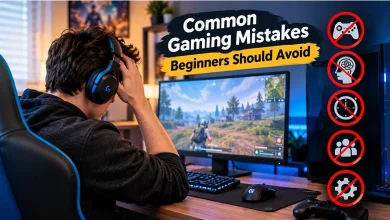
Watch for These Common Selection Mistakes
Choosing Only by Genre
Saying that you like action games does not tell you whether you prefer precision challenges, exploration, combat, or fast arcade rounds. Look at the mechanics within the genre.
Ignoring Session Length
A game may be enjoyable but inconvenient if its typical sessions do not fit your available time. Choose something that works with your normal routine.
Assuming Difficult Means Better
Difficulty is valuable when it creates the type of challenge you enjoy. If you want a relaxing experience, excessive difficulty can reduce the value of the game rather than improve it.
Following Someone Else’s Preferences
Recommendations from friends can help you discover games, but your enjoyment depends on your own preferences. Use recommendations as suggestions rather than guarantees.
Ignoring the First Few Minutes
The beginning of a game can reveal a lot about its controls, pace, objectives, and overall feel. If the basic gameplay already feels uncomfortable, do not assume that a higher level will automatically solve the problem.
When You Are Between Two Very Different Games
Sometimes the choice becomes easier when you stop asking which game is better and instead ask which experience you want right now.
If you are tired and want a low-pressure activity, a puzzle or casual game may make more sense than a demanding action game. If you have energy and want something that tests your reactions, an arcade or action game may provide the experience you are looking for.
Your preferred game can also change from day to day. You do not need one permanent play style. The useful goal is to recognize what kind of experience you want before you start searching.
Frequently Asked Questions
How do I choose a game if I do not know my play style?
Start with three questions: how much time do you have, how much challenge do you want, and what sounds more appealing right now—action, puzzles, strategy, exploration, or casual play? Your answers provide enough information to begin narrowing your options.
Should I choose games based on their genre?
Genre is useful for discovering possibilities, but it should not be your only filter. Two games in the same genre can have very different controls, pacing, difficulty, and objectives.
What type of game is good for short gaming sessions?
Games with quick starts, short rounds, and clear stopping points are generally easier to fit into short sessions. Arcade, puzzle, and many casual browser games can work well for this purpose.
How can I tell if a game is too difficult for me?
Pay attention to the reason you are failing. If practice helps you understand and improve, the challenge may be appropriate. If the rules or objectives remain unclear even after repeated attempts, the issue may be poor fit rather than insufficient skill.
Is it better to play one genre or several?
There is no need to restrict yourself to one genre. Trying different types of games can help you discover whether you prefer speed, strategy, puzzles, exploration, progression, or a combination of these elements.
Final Thoughts
Choosing the right game becomes much simpler when you focus on the experience rather than the game’s reputation. Think about your preferred pace, difficulty, session length, controls, and the type of activity you find satisfying.
The most useful question is not simply which game you should play. It is what kind of gaming experience do you want right now? Once you can answer that, you can narrow your choices quickly and spend more time playing games that genuinely fit your preferences.