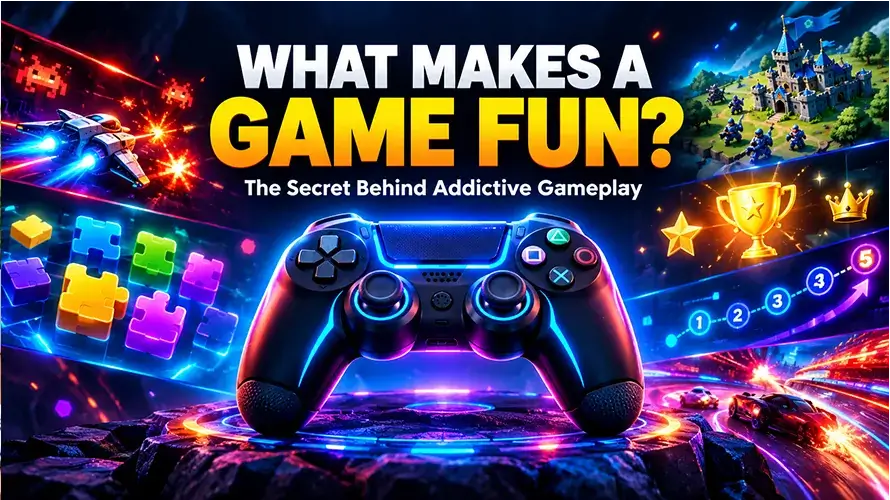
Some online games keep you playing for five minutes, while others make you think, “Just one more round,” long after you planned to stop. The difference is rarely just impressive graphics or a huge amount of content. What makes a game fun is usually the way several small design elements work together: responsive controls, clear goals, satisfying feedback, appropriate challenge, meaningful progress, and enough variety to keep the experience fresh.
This matters whether you prefer a quick browser arcade game, a competitive action title, a relaxing puzzle game, or a strategy experience that rewards careful planning. Understanding these elements can also help you choose games that match your personal preferences instead of relying only on screenshots, popularity, or genre labels.
Fun Starts With Gameplay That Feels Good
The first thing a player notices is not always the story or graphics. It is how the game responds to their actions. A character that moves precisely, a puzzle that reacts immediately, or an attack that feels properly timed can make a simple mechanic surprisingly enjoyable.
This is often called game feel. It includes controls, timing, animation, sound effects, visual feedback, and the relationship between an action and its result. A simple mechanic can remain interesting when every interaction feels responsive and understandable.
For browser games in particular, this can be important because players often want to start quickly. Complicated controls or slow introductions can create friction before the enjoyable part of the experience begins.
The Sweet Spot Between Easy and Difficult
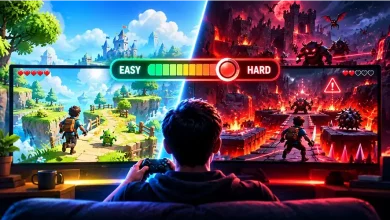
A game can become boring when there is no meaningful challenge, but excessive difficulty can be equally frustrating. The most engaging experiences often create a middle ground where the player understands what to do but still needs to improve to do it consistently.
Good difficulty also gives players useful information. If a player fails, they should usually have some idea of why. A missed jump, poorly timed move, incorrect puzzle solution, or unsuccessful strategy can become a learning opportunity when the game communicates the cause clearly.
Why gradual difficulty works
- Early challenges teach the rules: Players can learn basic mechanics without being overwhelmed.
- Later challenges test mastery: Familiar mechanics become more demanding through timing, combinations, or decision-making.
- Failure becomes informative: Players can adjust their approach rather than simply feeling blocked.
- Progress feels earned: Completing a difficult section can provide a stronger sense of achievement.
The ideal difficulty is also personal. Someone looking for a relaxing game may prefer forgiving mechanics, while another player may specifically enjoy difficult puzzles or demanding action challenges.
Clear Goals Give Players a Reason to Continue
Fun gameplay becomes easier to appreciate when players understand what they are trying to accomplish. The objective does not need to be complicated. Reaching the next level, beating a high score, solving a puzzle, surviving a wave, building an efficient base, or completing a short challenge can all provide direction.
Good goals also create a useful rhythm. The player makes a decision, takes action, sees the result, and understands what they can attempt next. When this cycle is clear, even a short gaming session can feel satisfying.
Games with no obvious objective can still work, especially when exploration or experimentation is the main attraction. In those cases, curiosity itself becomes the motivation.
Immediate Feedback Makes Actions Feel Meaningful
Imagine pressing a button and receiving almost no indication that anything happened. Even if the underlying mechanic is technically working, the experience can feel flat. Strong games usually provide feedback that confirms the player’s actions.
That feedback can come from animation, sound, score changes, particle effects, movement, a health bar, a new item, or a simple change in the game environment. The purpose is not to make every action flashy. It is to make cause and effect easy to understand.
A puzzle game might confirm a correct move with a subtle animation. An arcade game might increase a score immediately after a successful action. A strategy game might visibly show the consequences of a player’s decision. These small details help the player understand the relationship between their choices and the game world.
Progress Creates a Sense of Momentum
Players often enjoy seeing evidence that their time has produced something. Progress can take many forms, including new levels, improved abilities, higher scores, unlocked challenges, better understanding of the mechanics, or simply greater personal skill.
Progress does not have to rely on a large reward system. A player who finally completes a puzzle that previously seemed impossible has already made meaningful progress, even if nothing new is unlocked.
The strongest progression systems generally support the core gameplay rather than distracting from it. Rewards are most useful when they give players another reason to explore mechanics they already enjoy.
Variety Prevents Repetition From Becoming a Chore
Repetition is not automatically bad. Many popular arcade and puzzle games are built around repeating a familiar gameplay loop. The problem appears when every round demands exactly the same decisions with no meaningful variation.
Variety can be introduced through new environments, different objectives, changing enemy behavior, alternative strategies, increasingly complex puzzles, new combinations of mechanics, or different ways to approach the same challenge.
The goal is not to add as many features as possible. Too much variety can make a game feel unfocused. Effective variety changes the decisions players make while keeping the central identity of the game recognizable.
Player Choice Makes a Game Feel Personal
Choice can turn a simple activity into a more personal experience. Even small decisions can make players feel that their actions matter.
In a strategy game, players may decide how to spend limited resources. In an action game, they might choose between aggressive and defensive approaches. In a puzzle game, they may discover several possible routes to a solution. In a casual game, customization can provide a sense of ownership without changing the basic rules.
Not every game needs deep branching decisions. The important factor is whether the choices fit the game’s purpose and produce understandable consequences.
Different Genres Create Fun in Different Ways
There is no single formula for enjoyable gameplay. A mechanic that makes an arcade game exciting might be completely inappropriate for a relaxing puzzle experience. Genre expectations strongly influence what players consider satisfying.
| Game Type | Common Source of Enjoyment | What Players Often Look For |
|---|---|---|
| Arcade | Fast reactions and repeatable challenges | Responsive controls, short rounds, high-score opportunities |
| Puzzle | Discovery and problem solving | Clear rules, logical challenges, satisfying solutions |
| Action | Timing and mastery | Responsive movement, varied encounters, strong feedback |
| Strategy | Planning and decision-making | Meaningful choices, resource management, adaptable tactics |
| Casual | Relaxation and accessibility | Simple controls, quick sessions, low entry barriers |
This is why asking whether a game is simply “fun” can be less useful than asking what kind of fun the game is designed to provide.
Why “One More Round” Happens
The urge to continue playing often comes from a clearly defined short-term goal. A player may be close to beating a previous score, finishing a level, solving a difficult puzzle, or improving a particular skill.
Short sessions can make this especially noticeable. When a round takes only a few minutes, starting another attempt feels manageable. The player can immediately apply what they learned from the previous attempt, creating a natural loop of action, feedback, adjustment, and another try.
This does not mean every game needs endless progression. A well-designed stopping point can also improve the experience by leaving players satisfied rather than exhausted.
Fun Is Not the Same as Endless Engagement
A useful distinction is that fun and retention are related but not identical. A game can encourage players to return through notifications, repetitive rewards, or long progression systems without necessarily offering particularly satisfying moment-to-moment gameplay.
For players choosing what to play, it is often more useful to examine the quality of the actual experience. Ask whether the controls feel responsive, whether the challenges are understandable, whether failure teaches something, and whether the core activity remains enjoyable after the novelty disappears.
A game does not need an enormous progression system to provide a rewarding experience. Sometimes a focused mechanic executed extremely well is enough.
A Quick Checklist for Choosing a Fun Online Game
If you are browsing a large selection of online games and do not know where to start, consider these questions before committing your time:
- Can I understand the basic objective quickly?
- Do the controls appear simple enough for the type of game I want?
- Does the game provide meaningful feedback after my actions?
- Will the difficulty match whether I want relaxation or challenge?
- Does the core gameplay offer enough variation to stay interesting?
- Can I make meaningful decisions rather than simply repeat one action?
- Does the game work well for the length of session I have available?
- Will progress come from improving my skills as well as unlocking rewards?
You do not need every answer to be positive. The point is to identify what kind of experience the game offers and whether that experience matches what you want at that moment.
Common Reasons a Game Stops Being Fun
Repetition without meaningful change
Repeating a successful action can be satisfying for a while. If the game never asks the player to adapt, however, the activity may eventually feel automatic.
Difficulty spikes
A sudden jump in difficulty can interrupt the learning process. A challenging section is more satisfying when players have had an opportunity to understand the mechanics needed to overcome it.
Unclear rules
Players can accept losing when they understand what went wrong. Confusing mechanics or unexplained outcomes can make failure feel arbitrary instead of useful.
Too many unnecessary systems
More features do not automatically create a better game. Menus, currencies, upgrades, missions, and customization options should support the central experience rather than bury it.
Slow access to the enjoyable part
Online and browser players often value immediacy. Excessive setup can make a game lose momentum before its main mechanic has had a chance to demonstrate why it is enjoyable.
How to Tell Whether a Game Is Right for You
The most useful question is not simply “Is this game fun?” It is “Does this game offer the type of fun I am looking for?” A person wanting a ten-minute break may prefer a compact arcade or casual game, while someone with more time may enjoy a strategy title that develops over longer sessions.
Your preferred challenge level matters too. Some players enjoy experimentation and failure, while others want a smooth experience where they can make steady progress. Neither preference is inherently better; they simply describe different reasons for playing.
Genre can provide a starting point, but the actual gameplay loop is usually more informative. Look beyond the label and consider what you will repeatedly do during a typical session.
Frequently Asked Questions
What makes a game fun?
Fun usually comes from a combination of responsive controls, clear goals, appropriate challenge, meaningful feedback, variety, progression, and choices that make the player’s actions feel important. The ideal combination depends on the genre and the individual player.
Why do some simple games become very addictive?
Simple games can be highly engaging when their core mechanic is easy to understand but difficult to master. Short rounds, immediate feedback, clear goals, and opportunities to improve can create a satisfying cycle without requiring complicated systems.
Does better graphics make a game more fun?
Graphics can improve presentation and atmosphere, but visual quality alone does not guarantee enjoyable gameplay. Controls, challenge, pacing, feedback, and the quality of the core mechanics usually have a more direct relationship with moment-to-moment interaction.
Can a difficult game still be fun?
Yes. Difficulty can be enjoyable when challenges are understandable, failures provide useful information, and players have a realistic way to improve. Difficulty becomes less satisfying when outcomes feel arbitrary or the game fails to teach the skills needed to progress.
What makes browser games enjoyable?
Browser games often benefit from quick access, understandable controls, short or flexible sessions, and mechanics that become enjoyable quickly. A focused gameplay loop can work particularly well when players do not want a lengthy setup process.
Final Thoughts
There is no universal formula for fun, but the strongest games usually make the connection between player action and satisfying result feel clear. They give players something worth doing, provide feedback that explains what happened, offer challenges that encourage improvement, and introduce enough variety to keep familiar mechanics interesting.
When choosing your next online game, pay attention to the gameplay loop rather than judging the title by its genre or presentation alone. The best match for you is the one whose style of challenge, pacing, interaction, and progression fits the experience you actually want to have.