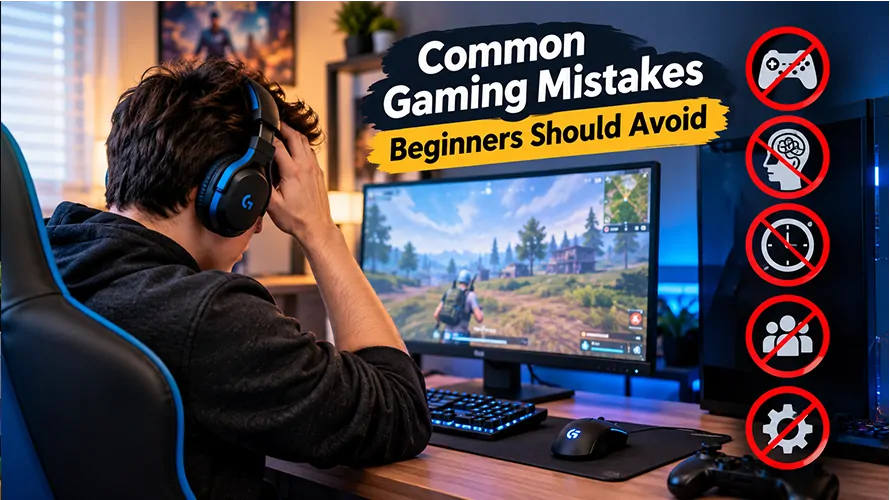
Starting a new game can be surprisingly difficult when you do not yet understand its controls, objectives, pacing, or rules. A beginner may lose repeatedly not because the game is too difficult, but because a small misunderstanding is being repeated every few minutes.
Many gaming mistakes beginners make are easy to correct once they become visible. Learning to read the objective, understand the controls, choose an appropriate difficulty, manage resources, and learn from failed attempts can make the first hours of a game much more enjoyable.
1. Skipping the Basic Instructions
One of the most common mistakes is rushing past tutorials, control screens, or introductory explanations. Beginners sometimes assume these sections are unnecessary because they want to start playing immediately.
That can create problems later. A game may introduce an important movement technique, inventory function, combat mechanic, or objective system that is difficult to discover independently.
You do not need to memorize every instruction. Pay particular attention to anything that explains movement, attacks, defense, interaction, objectives, saving, inventory management, or special abilities.
2. Choosing a Difficulty That Does Not Match Your Experience
Difficulty settings are designed for different types of players. Selecting the hardest option simply because it sounds more impressive can turn learning the game into a frustrating exercise.
If you are unfamiliar with a particular genre, starting at a moderate or beginner-friendly difficulty can give you enough room to learn the mechanics. Once the basic systems become comfortable, increasing the challenge can be much more rewarding.
The opposite can also happen. If a game feels completely effortless after you understand its mechanics, a higher difficulty may provide a more engaging experience.
A useful rule for beginners
- Choose an easier setting when you are learning unfamiliar mechanics.
- Choose a moderate setting when you understand the genre but are new to the specific game.
- Increase the difficulty when the current setting no longer requires meaningful decisions.
3. Trying to Master Everything at Once
New games often contain many systems: movement, combat, crafting, upgrades, maps, quests, equipment, abilities, and resource management. Trying to learn all of them simultaneously can overload your attention.
Instead, identify the core gameplay loop first. For example, in an action game you might focus on movement, basic attacks, defense, and enemy patterns before worrying about advanced equipment combinations.
Once the fundamentals become automatic, secondary mechanics are easier to understand because you already know how they fit into the larger game.
4. Repeating the Same Failed Strategy
Losing several times is not necessarily a sign that you need faster reactions. Sometimes the real problem is that you are approaching the same situation in exactly the same way.
After a failed attempt, pause and identify what actually caused the failure. Did you run out of resources, attack too early, ignore an enemy pattern, choose the wrong equipment, or misunderstand the objective?
A failed attempt becomes useful when it changes what you do on the next attempt.
The goal after a mistake is not simply to try again. It is to try again with better information.
5. Ignoring the Game’s Environment
Beginners often concentrate so heavily on their character that they overlook useful information around them. Levels can communicate danger through sounds, visual changes, enemy positioning, signs, item placement, or environmental clues.
In puzzle and strategy games, the environment may contain most of the information needed to solve a problem. In action games, it can reveal safer routes, useful cover, hazards, or approaching enemies.
Developing the habit of looking around before acting can prevent unnecessary failures.
6. Spending Resources Without a Plan
Games frequently give players limited resources such as health items, ammunition, currency, energy, upgrade materials, or special abilities. Using everything immediately can create a difficult situation later.
This does not mean you should save every item forever. Resources are useful precisely because they can solve problems. The important distinction is between using something because it is genuinely helpful and using it simply because it is available.
Before spending a valuable resource, consider whether the current situation actually requires it and whether a more difficult encounter could benefit from keeping it.
7. Changing Controls Without Understanding Them
Custom controls can improve comfort, but changing several inputs at the beginning of a game can make learning more confusing. If you change a control and then struggle, it may be difficult to tell whether the problem comes from the game or from your configuration.
Start with the default controls unless they cause a genuine accessibility or comfort problem. Once you understand the standard layout, change individual controls based on how you actually play.
For browser games especially, check whether the game provides keyboard shortcuts or control instructions before assuming that a key is not working.
8. Playing Too Fast
Speed is useful in games that reward quick reactions, but rushing through every situation can be a disadvantage while learning. Beginners may attack before recognizing an enemy pattern, skip useful information, or move into an area without checking what is ahead.
Try separating learning sessions from performance sessions. During the first attempts, deliberately slow down and observe what happens. Once you understand the situation, you can gradually increase your pace.
9. Comparing Your Progress With Experienced Players
Watching experienced players can be educational, but it can also create unrealistic expectations. Someone who has spent hundreds of hours with a game will naturally make decisions faster than someone who started yesterday.
Use advanced gameplay as a source of ideas rather than as a standard you must immediately match. Pay attention to specific techniques you can practice instead of comparing your overall performance.
For example, rather than thinking, “I am much slower than this player,” identify a smaller goal such as improving movement, learning three enemy patterns, or becoming more consistent with a particular control.
10. Ignoring Comfort and Accessibility Settings
Beginners sometimes assume that changing visual, audio, control, or accessibility options means they are playing the game incorrectly. In reality, these settings exist to help different players interact with games more comfortably.
If text is difficult to read, adjust the available display options. If certain controls feel uncomfortable, check whether they can be remapped. If visual effects make it harder to follow the action, look for relevant settings that improve clarity.
The best configuration is one that lets you understand and control the game effectively.
A Simple Mistake-to-Solution Checklist
| Common problem | What may be causing it | Useful response |
|---|---|---|
| Losing immediately | Unfamiliar controls or mechanics | Replay the tutorial and practice basic movement |
| Running out of resources | Using items too frequently | Reserve valuable resources for situations that require them |
| Getting stuck | Missing an objective or environmental clue | Review the objective and explore the surrounding area |
| Repeatedly failing the same challenge | Repeating the same strategy | Change one part of your approach and observe the result |
| Controls feel awkward | Uncomfortable default configuration | Adjust individual controls after learning the basics |
| Game feels overwhelming | Trying to learn every system simultaneously | Focus on the core gameplay loop first |
How to Turn Mistakes Into Faster Progress
You do not need to eliminate mistakes to become better at games. A more useful goal is to make each mistake informative.
When something goes wrong, ask three simple questions: What happened? Why did it happen? and What will I change next time? This turns frustration into a small learning cycle.
It can also help to change only one variable at a time. If you alter your controls, difficulty, strategy, equipment, and play style simultaneously, you may not know which change solved the problem.
For difficult sections, short practice sessions can be more productive than repeatedly playing while frustrated. Take a break when concentration drops, then return with a specific objective rather than simply attempting the same challenge again.
When Should a Beginner Look for a Guide?
Using a guide is not a failure. The important question is whether the information helps you continue enjoying the game rather than replacing the experience completely.
If you are stuck because you do not understand a mechanic, a short explanation can save considerable time. If you are struggling with a difficult encounter, learning one relevant technique may be enough.
For puzzle games in particular, consider looking for a hint before searching for a complete solution. That gives you an opportunity to solve the problem yourself while still avoiding unnecessary frustration.
Common Mistakes by Game Type
Action games
Beginners often focus entirely on attacking. Learning movement, positioning, defense, timing, and enemy patterns is usually just as important.
Strategy games
A common mistake is spending resources immediately without considering what will be needed later. Before committing to a major decision, consider both the immediate benefit and the next stage of the game.
Puzzle games
Players can become trapped by assuming that their first interpretation of a puzzle must be correct. When progress stops, reconsider the rules rather than simply trying the same solution repeatedly.
Arcade games
Arcade-style games often reward repetition and timing. Beginners may improve faster by learning patterns and practicing a specific section instead of focusing only on achieving a high score.
Casual and browser games
The biggest mistake can be assuming that simple controls mean there is nothing to learn. Even straightforward games may contain objectives, scoring systems, power-ups, timers, or mechanics that reward careful play.
Frequently Asked Questions
What is the most common mistake beginners make in games?
One frequent mistake is trying to progress without understanding the basic mechanics. Learning the controls, objectives, and core gameplay loop first can prevent many avoidable problems.
Should beginners always play on easy difficulty?
No. The appropriate difficulty depends on your experience and what you want from the game. A moderate setting may be suitable if you already understand the genre, while an easier setting can provide more room to learn unfamiliar mechanics.
Is it bad to use gaming guides as a beginner?
No. Guides can be useful when you are genuinely stuck or confused. For puzzles and exploration, a small hint may be preferable to reading a complete solution because it preserves more of the discovery process.
How can beginners improve without getting frustrated?
Focus on one skill or problem at a time. After a failed attempt, identify the cause and change one part of your approach rather than immediately repeating the same strategy.
Should beginners change the default controls?
Only when the default configuration is uncomfortable or unsuitable for your needs. Learning the original layout first can make it easier to understand the game’s intended control scheme before making personal adjustments.
Final Thoughts
Most beginner mistakes are not permanent obstacles. They are signs that a game has a mechanic, pattern, or decision that you have not learned yet. Slow down when necessary, pay attention to what caused a failure, manage resources thoughtfully, and give yourself time to build familiarity.
The fastest progress does not always come from playing faster. It often comes from noticing what went wrong and making the next attempt meaningfully different.